
Planning Smart Lighting in an Open-Plan Living and Dining Room
Start with the way your home works
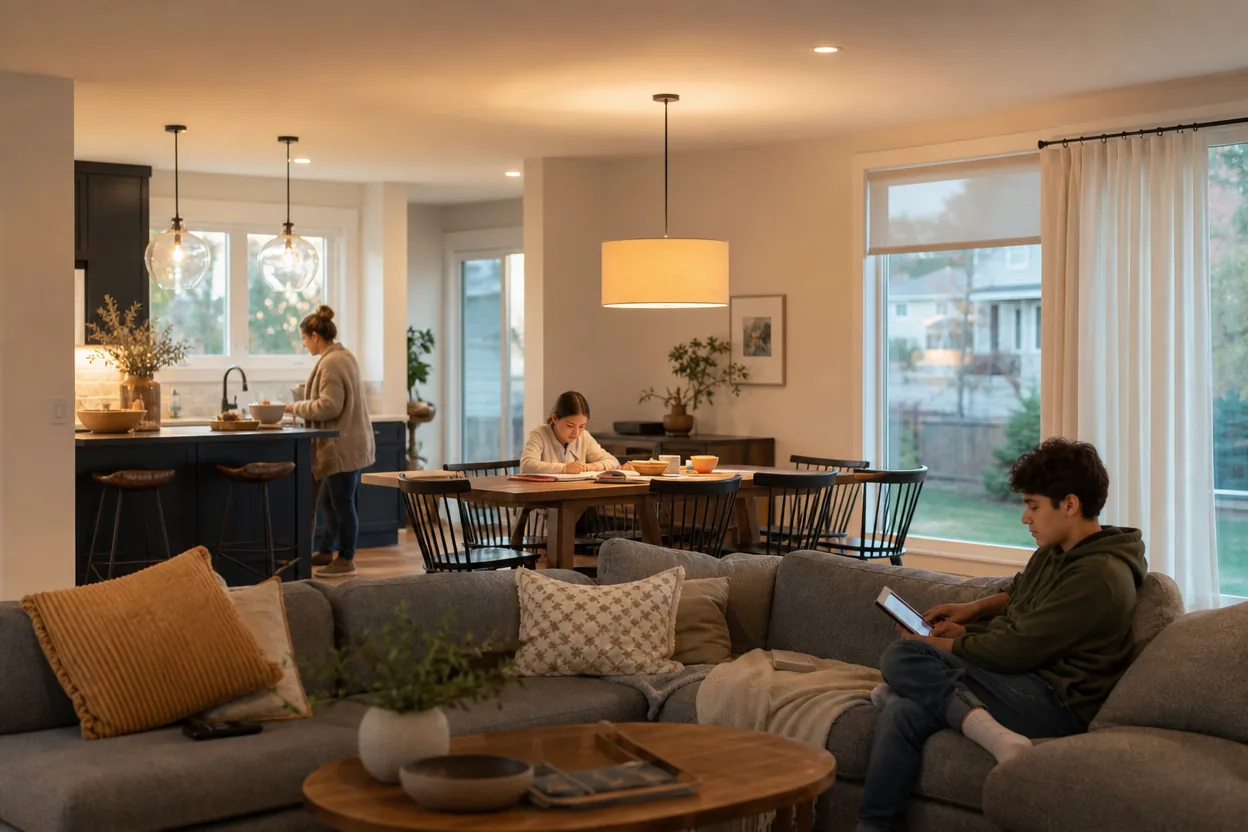
This guide looks at an open-plan space used for meals, homework, and evening downtime. The goal is straightforward: The same room changes purpose throughout the day, so a single bright ceiling setting rarely suits every activity.
That routine gives the buying decision a useful test: write down when the device should help, who will use it, and what the household should do if the app, internet, or automation is unavailable. If a proposed setup cannot handle those ordinary moments, extra features are unlikely to fix the mismatch.
What to compare before choosing
For this setup, compare zones, fixture layout, color temperature range if needed, switch behavior, and how scenes can be named clearly. Check the manufacturer’s current compatibility information and installation requirements before ordering; specifications and supported integrations can change.
Make the comparison concrete: write down the exact room, the people who need access, any existing wiring or hub, and the ongoing costs. Then check each candidate against the same list. A control that household members can use without coaching is often more valuable than a longer feature list.
The main trade-off
A few well-planned zones are easier to maintain than a bulb in every socket. More granular control helps only when people will actually use it.
A before-you-buy checklist
- Group lights by task and physical area.
- Prioritize dining, work, and evening scenes.
- Test voice names with the phrases household members naturally use.
- Plan how visitors can control the room without an app.
A practical next step
For this household, start by checking whether a device can support this routine: The same room changes purpose throughout the day, so a single bright ceiling setting rarely suits every activity. Verify fit, privacy settings, return terms, ongoing fees, and fallback controls on the maker’s product page. If the first option adds more setup than the routine is worth, compare a simpler control before buying.